Backcountry Pilot • Looking to Build a Propane Engine Pre Heater

Looking to Build a Propane Engine Pre Heater

Avionics, airplane covers, tires, handheld radios, GPS receivers, wireless Wx uplink...any product related to backcountry aircraft and flying.
63 postsPage 3 of 41, 2, 3, 4

Re: Looking to Build a Propane Engine Pre Heater

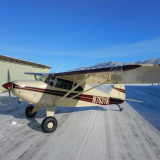
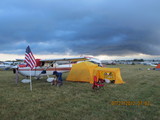
I am using an EZ-HEAT oil pan heater, 300 watt and on this trip to Yukon carrying a Honda knock off 900 watt generator(22 lbs, 5hr/gal). Not essential yet at just below freezing but works well, could run battery warmer as well.
Oil temp probe is at top of engine block so it confirms entire block gets warm. Have old blanket and cowl plugs if it gets colder. EZ-HEAT has light built into plug, thermostat and I pull plug out from oil dip stick door. Dawson YK has outlets at tiedowns which makes it easy.

Image.
cbfraser offline
User avatar
Posts: 87
Joined: Sat Mar 22, 2014 1:42 pm
Location: N. Vancouver, BC
FindMeSpot URL: cbfraser.ca
Aircraft: Bushmaster

Re: Looking to Build a Propane Engine Pre Heater

cbfraser wrote:I am using an EZ-HEAT oil pan heater, 300 watt and on this trip to Yukon carrying a Honda knock off 900 watt generator(22 lbs, 5hr/gal). Not essential yet at just below freezing but works well, could run battery warmer as well.
Oil temp probe is at top of engine block so it confirms entire block gets warm. Have old blanket and cowl plugs if it gets colder. EZ-HEAT has light built into plug, thermostat and I pull plug out from oil dip stick door. Dawson YK has outlets at tiedowns which makes it easy.

Image.

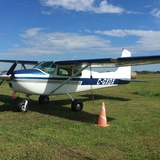
Slight drift here, but what kind of plane is that cb?
A1Skinner offline
Supporter
User avatar
Posts: 5186
Joined: Sat Jan 21, 2012 11:38 am
Location: Eaglesham
FindMeSpot URL: [url:1vzmrq4a]http://share.findmespot.com/shared/faces/viewspots.jsp?glId=0az97SSJm2Ky58iEMJLqgaAQvVxMnGp6G[/url:1vzmrq4a]
Aircraft: Cessna P206A, AT402/502/602

Re: Looking to Build a Propane Engine Pre Heater

Have the reiff deluxe system used at -20 and works vary well have it plugged into a timer so it kicks on the same time every morning and I just plug it in when I'm going to use the plane .
Also be aware plug it in when you're going to use the plane or leave it plugged in or don't plug it in but don't have a kick in and out all the time that can cause it to draw in more moisture and cause damage to your engine and make it rust from the inside out
tcraft offline
User avatar
Posts: 297
Joined: Wed Aug 09, 2006 7:49 pm
Location: ontario or
shawn coleman
2202T
tcraft f-22

Re: Looking to Build a Propane Engine Pre Heater

A1Skinner wrote:
cbfraser wrote:I am using an EZ-HEAT oil pan heater, 300 watt and on this trip to Yukon carrying a Honda knock off 900 watt generator(22 lbs, 5hr/gal). Not essential yet at just below freezing but works well, could run battery warmer as well.
Oil temp probe is at top of engine block so it confirms entire block gets warm. Have old blanket and cowl plugs if it gets colder. EZ-HEAT has light built into plug, thermostat and I pull plug out from oil dip stick door. Dawson YK has outlets at tiedowns which makes it easy.

Image.

Slight drift here, but what kind of plane is that cb?

Stretched pa20 aka bushmaster
Not too much pa20 left in it
D&e wings, grove gear io360
cbfraser offline
User avatar
Posts: 87
Joined: Sat Mar 22, 2014 1:42 pm
Location: N. Vancouver, BC
FindMeSpot URL: cbfraser.ca
Aircraft: Bushmaster

Re: Looking to Build a Propane Engine Pre Heater

cbfraser wrote:
A1Skinner wrote:
cbfraser wrote:I am using an EZ-HEAT oil pan heater, 300 watt and on this trip to Yukon carrying a Honda knock off 900 watt generator(22 lbs, 5hr/gal). Not essential yet at just below freezing but works well, could run battery warmer as well.
Oil temp probe is at top of engine block so it confirms entire block gets warm. Have old blanket and cowl plugs if it gets colder. EZ-HEAT has light built into plug, thermostat and I pull plug out from oil dip stick door. Dawson YK has outlets at tiedowns which makes it easy.

Image.

Slight drift here, but what kind of plane is that cb?

Stretched pa20 aka bushmaster
Not too much pa20 left in it
D&e wings, grove gear io360

Ok. Thought it looked like a bushmaster, but the spring gear threw me off.
A1Skinner offline
Supporter
User avatar
Posts: 5186
Joined: Sat Jan 21, 2012 11:38 am
Location: Eaglesham
FindMeSpot URL: [url:1vzmrq4a]http://share.findmespot.com/shared/faces/viewspots.jsp?glId=0az97SSJm2Ky58iEMJLqgaAQvVxMnGp6G[/url:1vzmrq4a]
Aircraft: Cessna P206A, AT402/502/602

Re: Looking to Build a Propane Engine Pre Heater

lesuther wrote:Mine is not thermostatically controlled. It can get mighty warm when the ambient temp is over 70F. It has cylinder and oil heaters. It takes hours to get the temps up using the installed heaters whereas the stove and solar powered fan do the job in an hour or less (blowing hot air works a lot faster than natural convection).

As for the stove approach, I must have missed the parts in all those books on Alaska flying where all those planes burned up from heater fires. Quite an omission. And all those people who use them now too never seem to mention this issue. Maybe they are too embarrassed, or maybe...not.

The risk is almost 100% theoretical. The reality is...boring.


Glad you said it before me. Ive been using it for a lot of years now, no problems, I don't fill the cabin with moisture (unlike a propane heater, we all know propane is a wet heat) My co detector never has turned black on me with the hose in the cabin. But what I do know, I guess I am just a babbling idiot that doesn't fly in the winter I am just putting forth old wives tales.

If you have a plane with enough cargo room to carry a generator more power to ya (not much of a pun intended), but if your flying remote and you have all your survival gear, wing covers etc, stuffed into the plane you can run out of room real quick. I will take my heater any day of the week and twice on sundays versus sitting on a lake with a plane that wont start... I will take the multifuel heater any day over the propane because I have had to preheat mine, then loan my heater to a buddy to get his fired up because the propane froze up and didn't do him a bit of good.. He tried the mixed butane / propane fuel too but it was just as bad as straight propane.

There are a whole lot of guys flying up here that have some form of the heater set up I have and no one I know has burned a plane down or been stuck out at a remote location because the darn thing wouldn't work.
akavidflyer offline
User avatar
Posts: 521
Joined: Sat Nov 20, 2010 7:36 pm
Location: Soldotna AK

Re: Looking to Build a Propane Engine Pre Heater

akavidflyer wrote:If you have a plane with enough cargo room to carry a generator more power to ya (not much of a pun intended), but if your flying remote and you have all your survival gear, wing covers etc, stuffed into the plane you can run out of room real quick.


Yeah, a lot of back country planes have low useful loads or can't be used at full gross and still get into the desired strip.

Just to put a number to it though, the honda 2000 only weighs 46lbs. So is an option in a lot of scenarios.
rw2 offline
User avatar
Posts: 1799
Joined: Sat Dec 22, 2012 1:10 pm
Location: San Miguel de Allende
FindMeSpot URL: https://share.delorme.com/LaNaranjaDanzante
Aircraft: Experimental Maule
Follow my Flying, Cooking and Camping adventures at RichWellner.com

Re: Looking to Build a Propane Engine Pre Heater

rw2 wrote:
akavidflyer wrote:If you have a plane with enough cargo room to carry a generator more power to ya (not much of a pun intended), but if your flying remote and you have all your survival gear, wing covers etc, stuffed into the plane you can run out of room real quick.


Yeah, a lot of back country planes have low useful loads or can't be used at full gross and still get into the desired strip.

Just to put a number to it though, the honda 2000 only weighs 46lbs. So is an option in a lot of scenarios.


If your in a cub that does not have extended baggage, or a Tcrate etc, its not so much the weight, its the bulk. Flying on skis, thats another 46 pounds behind the seat that I dont want there if I am in deep powder etc. Do what you want, Im just saying that a lot of guys that fly remote use a heater set up like mine and have for years. It works, the plastic cam doesnt break if its cold etc. If you have that honda along, you better have a back up plan if its really cold out or you can find yourself in the middle of nowhere with 2 4 strokes that don't want to start.... I am speaking from direct experience, not just hypothetical shit from an arm chair quarterback
akavidflyer offline
User avatar
Posts: 521
Joined: Sat Nov 20, 2010 7:36 pm
Location: Soldotna AK

Re: Looking to Build a Propane Engine Pre Heater

My vote is for the reiff, 150 watts on each cylinder and 2 x 200 watt elements on my oil pan. My little 1000 watt honda powers this setup with no issues. I also carry a outboard motor tank so I can extend the generator run time to 14 plus hrs if need be. Going on 4 years now running this setup commuting from Fort McMurray to Edmonton area. (no powered parking) Never a running problem with the generator in any temp. Keep synthetic oil in it. My personal cut off is -30 C, even at -30, engine is warm to the touch after 3 hrs.


I don't know.....everything book I have read on northern flying has at least one story on a torched plane from a blowpot.....


Same old story , people will spend a fortune on a plane and then get cheap with maintenance and proper care. Spend $80000 on a plane, then won't spend $800 on a proper preheat system. $20 of home depot dryer duct and a $40 propane heater to risk burning the plane down and no insurance? Not for me.....
Mark Y. offline
User avatar
Posts: 440
Joined: Tue Sep 03, 2013 5:51 am
Location: Chipman
Aircraft: Cessna 182B

Re: Looking to Build a Propane Engine Pre Heater

akavidflyer wrote:.... I am speaking from direct experience, not just hypothetical shit from an arm chair quarterback


Got it....sorry, I had no idea that having spent twenty years and ten thousand hours or so flying north of the Alaska Range makes me an arm chair quarterback.

For perspective, let's once again go back to the original post on this thread, where the poster noted that he was considering combustion pre heat, but also noted that he has electricity available. In this context, my primary point was, use electric heat. It is safer, cleaner and easier. Period.

As to airplanes having been destroyed and/or damaged, in my twenty years in northern Alaska, I can recall three airplanes damaged or destroyed during pre-heating with combustion heaters of one type or another. One of those was a catalytic that flared up, one involved a Red Dragon and one involved a Herman Nelson, which is arguably the safest kind of combustion heater known to man....used regularly by the airlines. That's not hyperbole.

Take a look at a Northern Companion heater. They have a fine mesh screen to catch clinkers that those little gasoline stoves sometimes throw off. I wonder why they'd install that? Risk of fire, maybe?

To suggest that there is no risk in using combustion heaters to pre-heat an airplane engine in cold conditions is pretty high on the naivete scale.

Is that risk huge? Not at all. As I noted earlier, I've pre-heated engines literally hundreds of times using catalytics, Northern Companion heaters (I still own the one I bought when they first came out-they were cheap then), Red Dragons, Herman Nelsons and a few other contraptions I'd rather not admit to.

But, my point was that there IS a risk, albeit small, and burning your pride and joy to the snow would truly ruin your day, particularly if it were sitting at the time on the North Fork of the Huslia River at -30 F, and that pride and joy was your ride back to civilization.

My primary point was that electric heat is safer, simpler and easier, and would always be my first choice IF it's available

Avid--so, your little camp stove doesn't put out moisture? Next time you're out and about in -20 or colder temperatures around town or at the airport, take a quick look at the exhaust coming from all those automobiles and airplanes. That's water vapor you're seeing. Where do you suppose that water is coming from....could it be from that gasoline and the combustion process? ALL gasoline has water in it. It's impossible to remove all of it.

Your Avid probably doesn't have enough stuff in the panel to worry about a little moisture, but all I said is I wouldn't put a hose from that rig into the cockpit of my airplane. Do what you want, with your airplane.


MTV
mtv offline
Knowledge Base Author
User avatar
Posts: 10514
Joined: Sat Feb 25, 2006 1:47 am
Location: Bozeman

Re: Looking to Build a Propane Engine Pre Heater

This isn't meant to be a spitting contest. If electricity is available, and you have the time, by all means. I use electricity all the time when available, even when the time required to wait is a pain in the butt.

In the boonies, if running a small generator for a few hours to warm things up strikes you as better, by all means, why not.

Keep in mind there are a few burned up planes out there from electrical heating as well, and one person on this forum showed pics of an oil pan heater that almost did the job on his plane. I also have no doubt that there may well be quite a few more incidents out there with combustion heaters than with electrical heaters.

But if the issue is risk, and if risk is defined by severity times likelihood, either option is pretty low on the property risk scale when performed with a modicum of common sense and care.

Gas heaters work really fast- especially with a little help from a fan. Electric heaters are great when available- mine is on a cell phone switch. My plane will not start when the engine is anywhere close to zero without jumpers hooked up to a pretty good car. I hate carrying around a generator when its only purpose at any point is to warm a cold engine. I have a nice small one that is up to the task, but why bother when I have a gas heater that weighs maybe a couple of pounds and fits in my stove kit?

As for moisture, it is true. My engine will be coated in a heavy layer of frost within 15 minutes of starting to heat. It is gone within a half hour as the surface temps rise, and the engine is around 70-80 degrees on the surfaces when I stop, and dry. After I quit, the engine cools off to around 40 before I start as the cold interior continues to absorb heat. It works fine.

If you have power and a cell phone, why not just do that? Those of us that have to go places where we are screwed if the engine is cold can choose one of the methods...but don't be afraid of either.
lesuther offline
Posts: 1429
Joined: Fri Sep 24, 2010 1:26 pm
Location: CO

Re: Looking to Build a Propane Engine Pre Heater

lesuther wrote:This isn't meant to be a spitting contest. If electricity is available, and you have the time, by all means. I use electricity all the time when available, even when the time required to wait is a pain in the butt.

In the boonies, if running a small generator for a few hours to warm things up strikes you as better, by all means, why not.

Keep in mind there are a few burned up planes out there from electrical heating as well, and one person on this forum showed pics of an oil pan heater that almost did the job on his plane. I also have no doubt that there may well be quite a few more incidents out there with combustion heaters than with electrical heaters.

But if the issue is risk, and if risk is defined by severity times likelihood, either option is pretty low on the property risk scale when performed with a modicum of common sense and care.

Gas heaters work really fast- especially with a little help from a fan. Electric heaters are great when available- mine is on a cell phone switch. My plane will not start when the engine is anywhere close to zero without jumpers hooked up to a pretty good car. I hate carrying around a generator when its only purpose at any point is to warm a cold engine. I have a nice small one that is up to the task, but why bother when I have a gas heater that weighs maybe a couple of pounds and fits in my stove kit?

As for moisture, it is true. My engine will be coated in a heavy layer of frost within 15 minutes of starting to heat. It is gone within a half hour as the surface temps rise, and the engine is around 70-80 degrees on the surfaces when I stop, and dry. After I quit, the engine cools off to around 40 before I start as the cold interior continues to absorb heat. It works fine.

If you have power and a cell phone, why not just do that? Those of us that have to go places where we are screwed if the engine is cold can choose one of the methods...but don't be afraid of either.


Yes, and as with anything else in aviation, don't be stupid. All the incidents I know of associated with pre-heating could have easily been avoided.

MTV
mtv offline
Knowledge Base Author
User avatar
Posts: 10514
Joined: Sat Feb 25, 2006 1:47 am
Location: Bozeman

Re: Looking to Build a Propane Engine Pre Heater

mtv wrote:
akavidflyer wrote:.... I am speaking from direct experience, not just hypothetical shit from an arm chair quarterback


Got it....sorry, I had no idea that having spent twenty years and ten thousand hours or so flying north of the Alaska Range makes me an arm chair quarterback.

Your Avid probably doesn't have enough stuff in the panel to worry about a little moisture, but all I said is I wouldn't put a hose from that rig into the cockpit of my airplane. Do what you want, with your airplane.
MTV


I was not calling you the arm chair QB.. I'm sure I have just as much stuff in the panel as your 11 does. I've used it on the 12, the pacer and several others. I know guys that use it on their 180's, that's where I got the idea.

I've seen guys use a Mr. Buddy propane heater in the cockpit and they have a solid layer of moisture in the cockpit for about the first hour until it gets hot enough in there to dry itself out. My heater has never put moisture on my windows.

Yes, people have burned down planes with various types of heater.. I also have screens on the inside of my lid where the two hoses go on to catch those little sparkies as well. There are a whole lot of guys preheating with red dragons and various derivatives of that heater and it seems to pretty much be the benchmark heater in use up here by most guys at the tie down spots. Those run a big flame and put out a lot of heat.

I will have electric heat on my 180 when she hits the skys again this winter, but I am not going to be using the little honda. There are many sweet little 2 strokes that rival the honda with just a tad bit more noise but a whole lot less cost and they dont rely on a plastic cam that strips at the worst times. I will still carry my little multi stove heater for back up as it serves several purposes in my survival kit. Cooking, heating the tent etc.
akavidflyer offline
User avatar
Posts: 521
Joined: Sat Nov 20, 2010 7:36 pm
Location: Soldotna AK

Re: Looking to Build a Propane Engine Pre Heater

Here is another option that I have used a few times.
The picture doesn't show the base but you screw a disc to the heat gun so it will stand up by itself and then get a piece of scat hose and run up inside the cowl. It probably won't last too many years if you use it frequently, but for the occasional warm up it works just fine.
:D Image
TangoFox offline
User avatar
Posts: 621
Joined: Fri Aug 21, 2009 7:06 am
Location: Where the wind takes me
Keep the Greasy side down!

Re: Looking to Build a Propane Engine Pre Heater

mtv wrote:Where do you suppose that water is coming from....could it be from that gasoline and the combustion process? ALL gasoline has water in it. It's impossible to remove all of it.


The water in gasoline is a minuscule amount. Even if you were to remove all of it, that water in your exhaust would be essentially unchanged.

The combustion process strips the hydrocarbon molecules apart (that is, separates the carbon from the hydrogen) and combines the atoms with oxygen to make CO2 and H2O as the exhaust products.

2 C8H18 + 25 O2 → 16 CO2 + 18 H2O

So for every two molecules of gas you need 25 Oxygen molecules (for 50 Oxygen atoms) and produce 16 molecules of CO2 and 18 of H2O.

Put into more meaningful terms: Burning a gallon of gas produces a little more than a gallon of water and, if liquified, about 2.25 gallons of CO2 (20 pounds).
rw2 offline
User avatar
Posts: 1799
Joined: Sat Dec 22, 2012 1:10 pm
Location: San Miguel de Allende
FindMeSpot URL: https://share.delorme.com/LaNaranjaDanzante
Aircraft: Experimental Maule
Follow my Flying, Cooking and Camping adventures at RichWellner.com

Re: Looking to Build a Propane Engine Pre Heater

Could not find a picture of the whole set up, but did find this article. This an excerp from F. E. Potts' Guide to Bush Flying
MTV, you ever have to use this, I did a couple times, never been more nervous in my life!! Did not go have a cup while it warmed up!!

For portability, choose a heat source that is small and light enough to be carried in the airplane's winter survival kit (see Chapter 24). This is important, for the professional bush pilot will every now and then find himself stuck overnight someplace due to a fast-moving weather system and will require the services of his engine preheater once the front moves through.

The best bush preheating rig is one that uses a simple old-fashioned gasoline blowtorch that can be operated on avgas taken directly from the airplane's fuel sumps. Since this is a systems approach, if you wish to use a different heat source you will find little difficulty in adapting this technique to your purpose. For the convenience of those who are unable to locate gasoline-powered blowtorches -- they are hard to find these modern days -- several alternative heat sources have been listed, though they all fall far below the level of utility that the blowtorches achieve.

Blowtorch and stovepipe method. The equipment list for this system consists of a small fire extinguisher, one or two gasoline blowtorches, three lengths of 3" stovepipe, an insulated engine cover, and a two- or five-gallon metal gasoline can. Here is how the system works:

After the last flight of the day, the oil is drained from the engine into the gasoline can. Quick-drains should be installed on all airplanes in the fleet to facilitate this daily chore.

The can of oil is taken inside your office or home, where it is placed near the stove so it can be kept warm until needed again.

When the airplane is to be called into service, the can of oil, with the lid removed, is placed on top of the stove and heated to about 122 degrees F/50 degrees C.

While the oil is warming, take the three lengths of 3" stovepipe and fasten them together. Place one end inside the engine compartment and temporarily rest the other end on the ground. The best place for the pipe to go into the Super Cub's engine compartment is on the right side by the brace to the exhaust stack. With the Cessna 180/185, it is best to drop the right cowl-flap and place the pipe there (see illustrations 28 and 31).

Carefully light the blowtorch away from the airplane, and when it is operating properly place the nozzle into the lower end of the stovepipe.

With the Cessna 180/185 and 206 you should use two blowtorches, and these must be placed in the same pipe (see illustration 31). Never use two pipes, one going to the right side cowl-flap and the other going to the left side cowl-flap, because of the danger that one of the blowtorches might go out, while still spraying fuel into the stovepipe. The second torch could then ignite the fuel inside the engine compartment. With both torches in the same stovepipe this danger is averted.

Adjust the insulated engine cover over the top and sides of the engine compartment so the right cooling air-inlet, behind the prop, is covered and the left air-inlet is open (see illustration 28). This is done to allow the heated air to pass over the engine and out the far side, taking the cold with it. Remember, heat-circulation is the name of the game. When using combustion heaters, if both air-inlets are blocked, it will take longer for the engine to reach starting temperatures.

When the engine is warm enough that the prop moves freely and the carburetor or fuel-injector is able to vaporize fuel correctly (about 45 minutes at -4 degrees F/-20 degrees C; 1+20 at -40 degrees F/-40 degrees C), the blowtorch(es) can be turned off and set aside to cool. At this point the hot oil is poured into the engine, three or four shots of priming are given, and the engine is turned over four to six times by hand. It is now ready to go, and should start on the first turn of the prop.
M6RV6 offline
User avatar
Posts: 2313
Joined: Mon Feb 25, 2008 5:52 pm
Location: Rice Wa. 82WN Magee Creek AERODROME
FindMeSpot URL: http://share.findmespot.com/shared/face ... sWKXuhKlg2
Have as much Fun as is Safe, and Keep SMILIN! GT,

Re: Looking to Build a Propane Engine Pre Heater

M6RV6,
I read the same article a few years ago. I went so far as to get a blow torch and light the thing up just once. No one could pay me enough to use it within 100 yards of my plane. Anyone who wants my blow torch can have it.
Charles
MontanaT-craft offline
User avatar
Posts: 113
Joined: Fri Nov 27, 2009 7:30 pm
Location: Butte

Re: Looking to Build a Propane Engine Pre Heater

M6RV6 wrote:Could not find a picture of the whole set up, but did find this article. This an excerp from F. E. Potts' Guide to Bush Flying
MTV, you ever have to use this, I did a couple times, never been more nervous in my life!! Did not go have a cup while it warmed up!!

For portability, choose a heat source that is small and light enough to be carried in the airplane's winter survival kit (see Chapter 24). This is important, for the professional bush pilot will every now and then find himself stuck overnight someplace due to a fast-moving weather system and will require the services of his engine preheater once the front moves through.

The best bush preheating rig is one that uses a simple old-fashioned gasoline blowtorch that can be operated on avgas taken directly from the airplane's fuel sumps. Since this is a systems approach, if you wish to use a different heat source you will find little difficulty in adapting this technique to your purpose. For the convenience of those who are unable to locate gasoline-powered blowtorches -- they are hard to find these modern days -- several alternative heat sources have been listed, though they all fall far below the level of utility that the blowtorches achieve.

Blowtorch and stovepipe method. The equipment list for this system consists of a small fire extinguisher, one or two gasoline blowtorches, three lengths of 3" stovepipe, an insulated engine cover, and a two- or five-gallon metal gasoline can. Here is how the system works:

After the last flight of the day, the oil is drained from the engine into the gasoline can. Quick-drains should be installed on all airplanes in the fleet to facilitate this daily chore.

The can of oil is taken inside your office or home, where it is placed near the stove so it can be kept warm until needed again.

When the airplane is to be called into service, the can of oil, with the lid removed, is placed on top of the stove and heated to about 122 degrees F/50 degrees C.

While the oil is warming, take the three lengths of 3" stovepipe and fasten them together. Place one end inside the engine compartment and temporarily rest the other end on the ground. The best place for the pipe to go into the Super Cub's engine compartment is on the right side by the brace to the exhaust stack. With the Cessna 180/185, it is best to drop the right cowl-flap and place the pipe there (see illustrations 28 and 31).

Carefully light the blowtorch away from the airplane, and when it is operating properly place the nozzle into the lower end of the stovepipe.

With the Cessna 180/185 and 206 you should use two blowtorches, and these must be placed in the same pipe (see illustration 31). Never use two pipes, one going to the right side cowl-flap and the other going to the left side cowl-flap, because of the danger that one of the blowtorches might go out, while still spraying fuel into the stovepipe. The second torch could then ignite the fuel inside the engine compartment. With both torches in the same stovepipe this danger is averted.

Adjust the insulated engine cover over the top and sides of the engine compartment so the right cooling air-inlet, behind the prop, is covered and the left air-inlet is open (see illustration 28). This is done to allow the heated air to pass over the engine and out the far side, taking the cold with it. Remember, heat-circulation is the name of the game. When using combustion heaters, if both air-inlets are blocked, it will take longer for the engine to reach starting temperatures.

When the engine is warm enough that the prop moves freely and the carburetor or fuel-injector is able to vaporize fuel correctly (about 45 minutes at -4 degrees F/-20 degrees C; 1+20 at -40 degrees F/-40 degrees C), the blowtorch(es) can be turned off and set aside to cool. At this point the hot oil is poured into the engine, three or four shots of priming are given, and the engine is turned over four to six times by hand. It is now ready to go, and should start on the first turn of the prop.


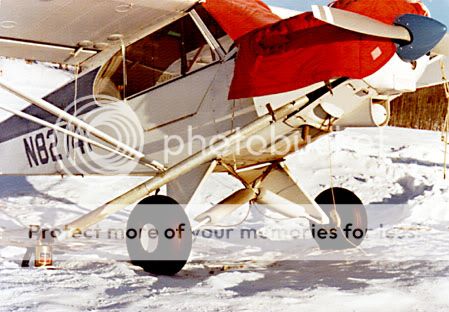
Here is one.
Image
TangoFox offline
User avatar
Posts: 621
Joined: Fri Aug 21, 2009 7:06 am
Location: Where the wind takes me
Keep the Greasy side down!

Re: Looking to Build a Propane Engine Pre Heater

I think I'd trust a Northern Companion sooner than some home grown system with a blow torch on one end. When I worked for the Wyoming Highway Department when I was in college, I remember one of the construction guys using a blow torch for something--can't recall what just now--but the size of the flame would discourage me from using it anywhere near my airplane. :shock:

Cary
Cary offline
User avatar
Posts: 3801
Joined: Sun Jan 10, 2010 6:49 pm
Location: Fort Collins, CO
"I have slipped the surly bonds of earth..., put out my hand and touched the face of God." J.G. Magee

Re: Looking to Build a Propane Engine Pre Heater

Fred Potts offered some good advice in his book on operating in the Alaska bush.

But, he also offered a little bit of total BS advice, and this blow torch engine heater is a bad idea.

MTV
mtv offline
Knowledge Base Author
User avatar
Posts: 10514
Joined: Sat Feb 25, 2006 1:47 am
Location: Bozeman

DISPLAY OPTIONS

PreviousNext
63 postsPage 3 of 41, 2, 3, 4

Who is online

Users browsing this forum: No registered users and 1 guest

Latest Features

Latest Knowledge Base