Jeredp wrote:So, whats the quickest way to get into geound effect? 'Pop' 10 degrees of flaps? Start the roll with 10 or 20? This has been a struggle for me. I feel like no matter what technique i use, my mains are stuck until about 45 mph. Thoughts or suggestions?
For myself, trying to pop the flaps, unless I'm starting with 10 already, is pretty hard to do and maintain directional control (here EZ Flap will say if I'd buy his product, that wouldn't be an issue, right?

). And frankly, I feel like I have enough to do to maintain control. So I don't worry about getting off the ground sooner than whenever the airplane wants to levitate with 10 flaps preset.
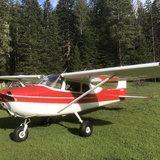
Here's what I do--you use it or not, as you see fit. My P172D has manual flaps, too, plus 180hp Lycoming and CS prop and droopy tips.
First,
I set the trim a little nose down, as I find it a lot easier to stay in low ground effect that way, pulling rather than pushing on the yoke. Wherever you normally put your trim for take off, roll the trim wheel one full motion forward. You might have to experiment with this a little, so that you don't get it so much nose down that you can't pull the yoke comfortably. But the idea is that if you relax your pull, the nose will go down, and it's your job not to let that happen.
Otherwise the airplane will tend to climb out of ground effect too quickly.I start with the flaps at 10--I've tried 20, and the airplane doesn't get off any quicker that I can tell, but directional control is a bit more difficult, and the extra drag reduces the acceleration somewhat. 10 works just fine.
Raise the nose just enough to barely get the nose tire off the ground--not necessary to have it off more than that. If you raise it too far, you will add unnecessary aerodynamic drag.
As soon as the mains leave the ground, relax a little on the yoke. With the nose down trim, the nose will lower, and you'll skim along just above the ground. The speed will increase, and when you're somewhat faster than Vx, pull back on the yoke and climb on out--I use 85-90 mph unless I need to climb more steeply. Since your Vfe is 100 mph, you'll want to raise the flaps at about that same speed. But there's no reason to raise them sooner than after the obstacles, unless you have a really tall obstacle to clear (172s climb better with 0 flaps). Better to just leave them there at 10 until you've cleared the obstacles, so that you won't accidentally lose altitude raising the flaps too soon.
There's only so much you can do with a 172, but that pretty simple methodology works pretty well for me.
Cary